The Pioneer Group Confession: Limited Evidence, Big Promises
In a single fortnight, the government has admitted its AI tutoring tools have 'limited' evidence, and the EEF has opened formal research into cognitive offloading. The state sector now has the right procurement filter. The independent sector needs to build one of its own.

The 60-second Briefing
- A DfE contract award notice published on June 18 conceded that AI tutoring tools are "limited in quantity, scope and evidence base."
- On June 8, the Education Endowment Foundation opened a formal research call on cognitive offloading in pupils aged 13 to 15. The language mirrors my Metacognitive Trap argument almost verbatim.
- The state sector now has a co-design pathway (Pioneer Group), a procurement standard requiring cognitive-offloading reporting, and a 2027 evidence base in train.
- Independent schools have none of this. They are not part of the Pioneer Programme architecture and they are not the subject of the EEF research.
- The procurement rule for independent schools writes itself: build the filter now, do not wait for the state sector's findings to filter down in 2028.
Two things happened in education AI in a single fortnight, and almost nobody outside of the EdTech press connected them.
On June 8, the Education Endowment Foundation opened an invitation to tender on the cognitive impact of generative AI in pupils aged 13 to 15. Their stated focus, in their own words, is "cognitive offloading, where students delegate cognitive processes such as recall, planning, reasoning, drafting, evaluation, or problem-solving to a generative AI system." Anyone who has read The Metacognitive Trap on this blog will recognise the language. The EEF is now formally commissioning the research I was citing the OECD on earlier this year. Set-up meetings are scheduled for October. Projects begin in November 2026.
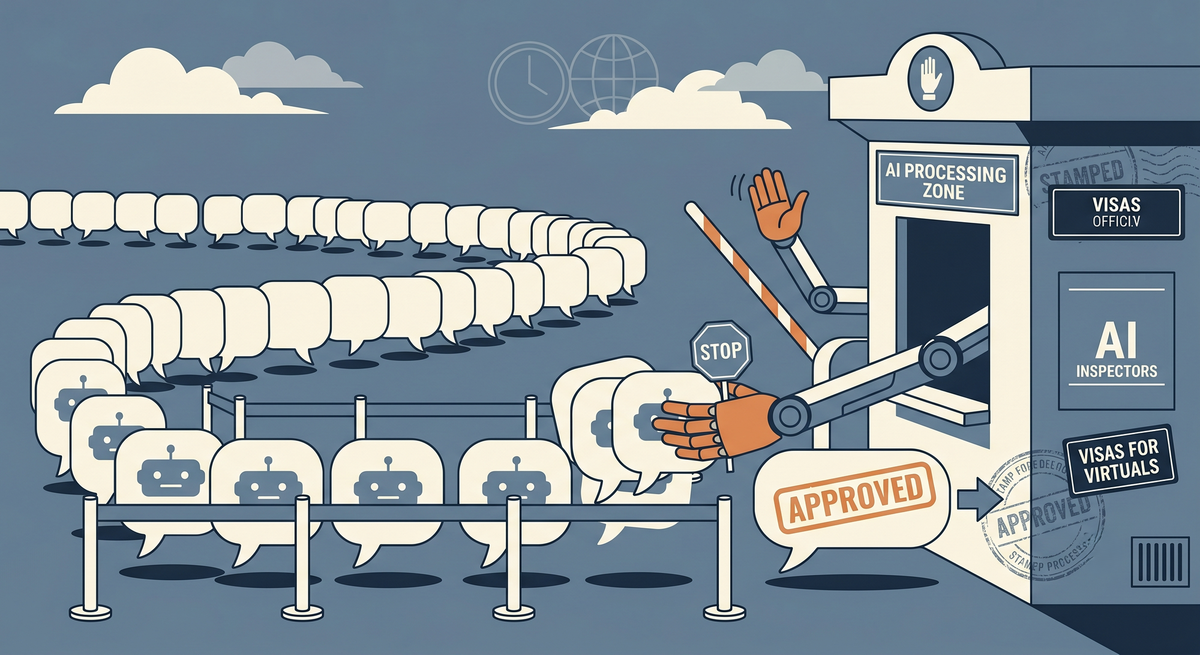
Ten days later, on June 18, Tes broke a story I think deserves more attention than it has received. The Department for Science, Innovation and Technology had published a contract award notice for the AI Tutoring Tools Pioneer Programme, and buried inside it was a sentence the government would not have wanted on a press release. AI tutoring tools, the notice said, are "limited in quantity, scope and evidence base with few providing full tutoring capacity and with limited public access to the research and development that underpins them."
That is the government, in its own procurement language, admitting that the tools it is planning to deploy to 450,000 disadvantaged pupils are not yet good enough, and not yet evidenced. Tes was crisp about it: "'Limited' evidence for AI tutoring tools, government says."
This post is not a victory lap, even though the temptation is there. The procurement rule I set out in The Metacognitive Trap – that if a tool removes the cognitive friction required for learning, schools should refuse to buy it – has effectively been adopted by the two bodies in this country with the most institutional weight on the question. The state sector is now in a markedly better position than it was a year ago. That is unambiguously good news, and the right response is not to look smug; it is to ask what independent schools should do about it.
So let me walk through what has actually been put in place, and what is still missing for the independent sector.
The Pioneer Group itself was announced in January 2026 and the tender ran in April. Up to eight EdTech companies, £300,000 each, with trials starting in classrooms this summer term and a national rollout from 2027. The target audience is 450,000 disadvantaged pupils. The eight chosen suppliers will co-design with schools, iterate on their existing products, and align their tools with the DfE's new machine-readable national curriculum. That is serious procurement infrastructure. The kind of thing the independent sector has spent the last twenty years admiring at the edges of state-sector announcements and never actually doing.
The May 6 update to the tender added something subtle but important. From September 2026, suppliers may be partnered with additional schools "in areas of higher deprivation and/or schools with lower technology maturity on an 'as needed' basis." This is the moment the trial begins to broaden from elite pilot to wider rollout, and it arrives in exactly the window when independent schools should be deciding whether to mirror, partner, or ignore. The window is shorter than people think.
Sitting underneath the Pioneer Group is the DfE's Generative AI Product Safety Standards, updated in January 2026. The detail in those standards that I think matters most – and which has been almost completely missed in industry coverage – is the requirement that AI products in schools report on "the rate of requests for cognitive offloading and the amount of cognitive offloading delivered." Read that again. The procurement standard now treats cognitive offloading as a measurable harm to be reported on, alongside data leakage and content moderation. The DfE has, in effect, written the Metacognitive Trap argument into the procurement specification.
Read together, the Pioneer Group, the Standards and the EEF research call are a coherent system. The state has built a procurement filter, an evidence pathway and a research backbone, all aimed at the same question: when does AI help pupils learn, and when does it stop them learning? That is the right question. It is the question I have been arguing schools should ask since the start of this blog.
Now the awkward part, and the reason I am writing this rather than just sharing the Tes piece on LinkedIn.
The Tony Blair Institute's Generation Ready report, published earlier in 2026, gives the system-level context that the Pioneer Group is being launched into. School-tech investment has fallen 96% since 2020. Only 0.7% of EdTech investment has gone to AI tools. Only five of the 28 leading AI brands are recognised by more than 10% of teachers. Barely half of secondary schools have reliable whole-school WiFi. That is the substrate the Pioneer Group is being grafted onto. The procurement filter is genuinely a good one. The market it is filtering remains chaotic, undercapitalised, and almost completely opaque to the people doing the buying.
For independent schools specifically, the position is awkward in a different way. They are not part of the Pioneer Programme. They are not the cohort the EEF research is designed to study. They sit outside the DfE's Risk Protection Arrangement, as I noted in The 73% Problem, and outside the procurement architecture that is now starting to drive the state sector's AI strategy. The Pioneer Group's evidence is unlikely to arrive before 2027, and the EEF's findings probably from 2028. By the time those arrive, the independent sector will have had two full years of unsupervised AI procurement during the peak vendor-pitch period.
There is a fork in the road for independent SLTs and IT directors, and it needs to be named. Schools can wait. They can let the state sector run the experiment and pick up the validated tools when the evidence arrives. That is a defensible position, particularly for cash-constrained schools wary of buying the wrong thing. The downside is that two years of marketing pressure from EdTech suppliers will not pause politely while they wait. Bursars and Heads will be sold things in the meantime, and what gets bought in those two years will shape what is on the network for a decade. The "wait for the evidence" position has hidden running costs.
The other option, and the one I have been arguing for since The Artificial Advantage, is for independent schools to build their own procurement filter now. The materials are all sitting on the table. The DfE's Generative AI Product Safety Standards are public. The cognitive-offloading requirement is published. The EEF's research scope is published. To save subscribers the work of starting from scratch, I have drafted a short procurement policy template built around these three documents – a customisable Word file that any school can adapt to its own structures. The questions the policy is built around are short and unforgiving. What cognitive processes is this tool doing for the pupil? What is left for the pupil to do? How will the school know the pupil is doing it? If the supplier cannot answer those three questions clearly, the tool is not yet ready.
There is a smaller piece of work that supports this too. The EEF's $2.4m partnership with Google.org, announced earlier this year, is funding an open-source guidance tool for schools on the most effective ways to use AI in teaching and learning. That is a genuine public good. When it arrives, it will be the cleanest single resource independent schools can build a procurement policy around. It is worth keeping an eye on the release date.
The state sector has, in the last fortnight, taken a measurable step in the right direction on AI procurement. That is genuinely good news, and the people who built the standards, the Pioneer Group and the EEF research call deserve credit. And, also, the independent sector is now visibly behind the state on this question, with no equivalent architecture, no equivalent evidence pathway, and a much bigger marketing exposure. Both are true. The first does not let anyone off the hook for the second.
For IT directors, the call to action is the same one I have been making since The Metacognitive Trap. Build the filter. Use the DfE's own standards as the spine. Demand cognitive-offloading transparency from every vendor. Refuse the tools that cannot show their working. The state sector has just made that argument considerably easier to win at SLT. Use the leverage while it is still warm.
The Pioneer Group has said the quiet part out loud. We should match it with the loud part: a procurement rule that means what it says.
See you in the digital staffroom.