The Party is Over. Now the Real Work Starts
The era of AI experimentation is coming to an end. The time of AI infrastructure is here.

The 60-Second Briefing
- A Policy Shift: The DfE announced a £23m AI pilot. The focus has moved from "magic" to evidence-based trials, specifically for SEND and workload reduction.
- The MIS Shock: The Key Group is discontinuing ScholarPack and Integris by February 2026. Schools using these platforms have exactly 12 months to migrate.
- Cyber Risks: The NCSC is retiring its free Web Check and Mail Check tools on March 31, 2026. You need a commercial alternative immediately.
- Ecosystem Wars: Google has made Gemini 3 Pro free for education. Microsoft is countering with "Offline AI" and professional credentials for staff.
- Infrastructure: Sky Business and RM are rolling out 100Gb-ready fibre. Bandwidth is the new bottleneck.
Waking Up from the Dream
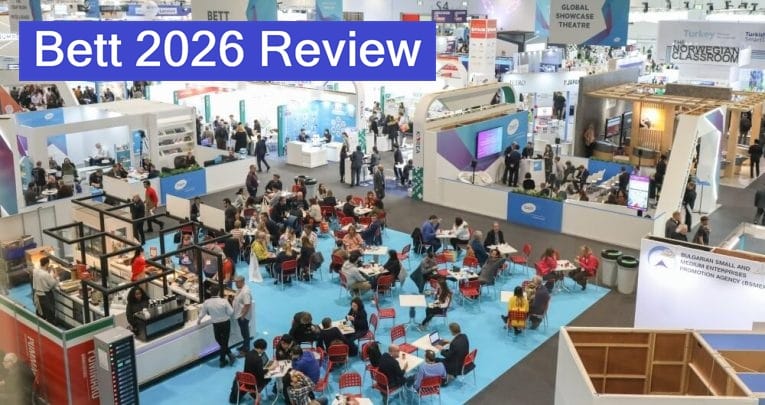
I walked into the ExCeL last week expecting the usual assault on the senses: flashing lights, over-caffeinated sales people, and vague promises that VR will fix the retention crisis.
But this year, the atmosphere felt different.
The frenzy of the last couple years, where every vendor was slapping an "AI Inside" sticker on their legacy product, had evaporated. In its place, I found something far more boring, but infinitely more valuable: pragmatism.
The theme of this year’s Bett Show was "Learning Without Limits," but for those of us who manage school technology on a day-to-day basis, I like to think the real theme was "Systems That Actually Work Together."
For the first time in years, I didn't leave worrying about which shiny gadget I might have missed. I left thinking about my school’s infrastructure, our data governance, and our strategy.
If Bett 2026 taught me anything, it is that the era of AI experimentation is coming to an end. The time of AI infrastructure is here.
Here is my take on what happened and what you need to consider in the coming weeks.
A Policy Shift
I have always said that good strategy trumps tools, so it was refreshing to hear Education Secretary Bridget Phillipson express pretty much the same view during her keynote speech.
In a sector often swayed by “stardust" (her word), Phillipson signaled a massive pivot towards a “clinical trial" model for EdTech.
The headline announcement was a £23 million investment to expand the EdTech Testbeds programme. Like many of us, the Department for Education (DfE) has caught on to the idea that it is not about what technology could do; they want to know what it does do.
Phillipson stated that AI tools must be put "through their paces in the cut and thrust of classrooms" before receiving public funding or endorsement. In other words, we don't just want lab results; technology must be able to deliver in the chaotic reality of a real school.
For schools, this is a shield against the hard sell. When a vendor approaches you next week promising their chatbot will boost pupil outcomes, you can now ask: "Where is your evidence from the testbed?"
The Secretary laid out "Five National Goals" for AI, prioritising safety and evidence. But the most interesting takeaway was the focus on SEND.
The DfE sees AI primarily as an inclusion tool. They want it generating accessible formats and personalising resources to reduce the admin burden on SENCOs.
For independent school Heads or Directors of Studies reading this, this is your new benchmark. The state sector is getting rigorous about evidence-based AI. To justify your fees, you cannot just have more tech than the state sector. You must use it better.
The Ecosystem Wars
I have written before about my frustration with systems that don't talk to each other: "The future is connected, or it is nothing."
Walking between the Microsoft and Google stands, it became clear that the days of running a hybrid estate are numbered. Both giants are making aggressive moves to lock you into their data ecosystem.
Microsoft
Microsoft isn't just trying to sell you software anymore; they are trying to professionalise your staff. Their big reveal was the Microsoft Elevate for Educators programme.
They realised the barrier to AI adoption isn't the software (we all have Copilot); it is staff confidence. So they are launching industry-recognised credentials in partnership with ISTE and ASCD.
This allows us to offer staff meaningful CPD that feels like a career qualification. It is far better than “just another IT training session."
Feature-wise, the new Teach function in Copilot creates lesson plans and quizzes from your existing curriculum documents. And it does this within your commercial data boundary, so your school's IP stays yours.
Also, hidden away in the Tech User Labs was a collaboration with TOMi.digital, where I saw AI running on end-user devices without an internet connection.
They pitched it for rural schools, but my mind went straight to resilience. An AI model that runs locally, with zero latency, and zero data leaving the classroom? Yes, please!
For Prep schools worried about online safety, or for continuity during outages, this is a game-changer.
Google, on the other hand, woke up and chose violence. They announced that Gemini 3 Pro, their most powerful AI model, is now free for education domains.
This is a direct shot at Microsoft’s paid Copilot licensing. For a Bursar looking at the bottom line, "free", linked to a tool as good as this, is a very powerful word.
They also addressed the cheating elephant in the room through a partnership with Khan Academy. They are rolling out a Writing Coach powered by Gemini which guides pupils through the process of writing (drafting, structuring) rather than generating the final essay. It turns AI from a plagiarism machine into a Socratic tutor. If you are fielding concerned emails from parents about "AI cheating," this tool is your answer.
My take? If you are a Microsoft school, stay the course as the security controls are superior. If you are a Google school, your license costs just dropped, but check those data privacy addendums.
If only I could find a way to combine the two…
The MIS Shake-Up
While the AI demos were flashy, the real drama was happening in the back-office discussions. If you haven't heard the news yet, you need to sit down.
The Key Group is discontinuing ScholarPack and Integris by February 2026.
This is big. Thousands of schools are effectively on a burning platform with just 12 months to migrate their core MIS.
The Key Group is offering a "seamless" migration to Arbor, their flagship product. Arbor is a decent, modern, cloud-native system, but as an IT Director, I get nervous when I am told I must migrate without a choice.
For schools using Integris, this is a critical risk point. Does Arbor have the bespoke reporting you need for your Governors? Does it handle your complex boarding requirements or alumni data? You cannot assume it does.
Competitors like Bromcom and iSAMS smelled blood in the water at the show. Bromcom was everywhere, flaunting their AI-driven analytics.
My advice is that you do not sleepwalk into this migration. If you are affected, treat this as a full procurement exercise.
Look at the market. A forced migration is the perfect time to ask: "Is our current MIS actually working for us?"
Infrastructure & Cyber
Now, let’s talk about the plumbing. After all, you can’t run a Ferrari on a dirt track!
The Sky / RM Partnership
Sky Business won the Innovation Award, which surprised a few people. Why?
They are partnering with RM Technology to roll out a 100Gb-ready fibre network for schools. This isn't sexy, but it is vital. We are moving to a world of 4K video streaming, VR headsets, and constant cloud syncing. Your current leased line is going to choke.
This partnership introduces "shadow VLANs" to prioritise critical traffic (like VoIP and safeguarding) over pupils downloading Steam updates. It is the invisible infrastructure that keeps a school running.
The NCSC Web Check Sunset
And then some bad news. The National Cyber Security Centre (NCSC) confirmed they are retiring their free Web Check and Mail Check tools on March 31, 2026.
I know many of us relied on these for a very basic health check of our external perimeter. Their removal leaves a gap.
Worse, it coincides with a concerning rise in fake fee scams. Research presented by IRIS Education revealed fraudsters are increasingly targeting independent school parents with sophisticated phishing emails that look exactly like they come from your Bursar, asking for fees to be diverted to a new bank account.
If you haven’t already, you need to budget for a commercial vulnerability scanner immediately. You also need to email parents today. Tell them the school will never change bank details via email.
The Good News
Amidst the technical churn, there were some genuine sparks of joy:
Reading is Back!
I love books, so the launch of the National Year of Reading 2026 was a highlight. In an age of TikTok brain, we are seeing a coordinated push to get children reading again.
Technology is actually helping here. Platforms like Sora and Reading Plus showed incredible data on how digital libraries can hook reluctant readers.
I was impressed by tools using AI to subtly adjust the reading age of a text in real-time. This allows a struggling pupil to access the same content as their peers without losing face.
That is technology serving humanity, not replacing it.
Hardware Built to Last
Promethean won Company of the Year, and they deserved it. Their new strategy isn't about selling you a new screen every three years. It is about longevity.
Their panels now feature modular components that you can upgrade without having to rip the screen off the wall.
For a Bursar trying to make a capital budget stretch five years, this is music to the ears. It also aligns with the sustainability agenda our pupils are rightly grilling us about.
An Opportunity for the Independent Sector
For those of us in the independent sector, still coming to terms with the impact of VAT and other changes, there is a clear opportunity here. We can become data safe havens.
As the state sector potentially rushes into mass-market cloud AI, we can differentiate. Those with the right resources can build private, secure, local AI environments.
We can offer parents a guarantee: "Your child learns with the most advanced AI, but their data never trains the model." That is a powerful value proposition.
What next?
I left Bett 2026 feeling exhausted but optimistic. The industry has matured.
The Wild West days of EdTech seem to be ending, replaced by standards, evidence, and ecosystems.
But with this maturity comes responsibility. We can no longer just buy tools; we have to architect systems.
Here is my "To-Do" list for this week:
- Check your MIS: If you are on ScholarPack or Integris, form a working group immediately. You have 12 months to move.
- Replace NCSC Tools: Find a commercial alternative for Web Check before March.
- Review your AI Policy: With Google making Gemini free, pupils will access it. Does your policy cover "AI-assisted writing"?
- Email Parents: Warn them about the fee scams. It’s happening to schools just like yours.
The technology is ready. The question now is: are we?
See you in the digital staffroom.