Chasing Ghosts: Addressing the Hysteria of 'Red vs Blue'
The viral 'Red vs Blue' school gang trend was nothing more than an AI-generated digital ghost story. While the physical danger was an illusion, the anxiety it caused was entirely real. We need to shift our safeguarding focus from chasing phantom threats to building genuine digital resilience.

The 60-second Briefing
- The Illusion: Algorithmic manipulation on TikTok and Snapchat turned a non-existent "Red vs Blue" trend into a national school safeguarding crisis.
- The Reality: Despite massive parental anxiety, police confirmed the physical threat was almost entirely a ghost story.
- The Resource Drain: Schools lost hundreds of hours to "phantom pastoral care", managing genuine fear caused by fake content.
- The Response: We must move from chasing individual hoaxes to building "algorithmic literacy" across the whole school community.
- The Upside: Using this as a live case study allows us to teach pupils (and parents) how synthetic content is designed to trigger emotional panic.
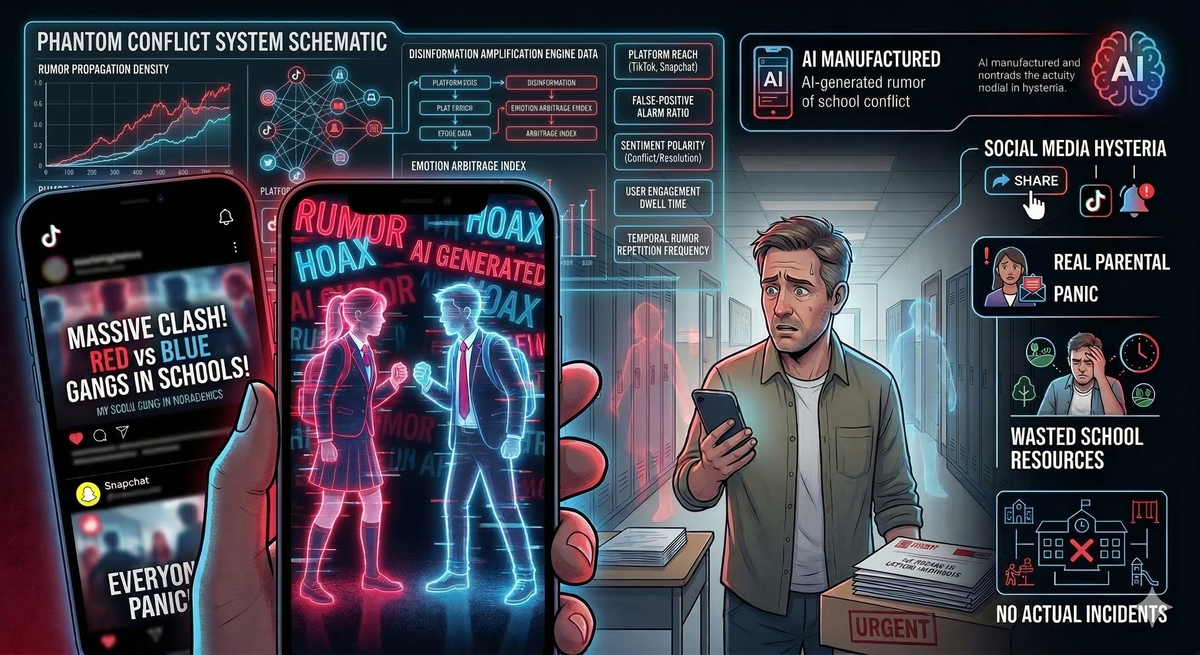
Walking into a school over the past few weeks must have felt like stepping onto the set of a poorly written dystopian thriller. Pastoral teams were dealing with unprecedented anxiety over the so-called 'Red vs Blue' gang wars, which dominated parent WhatsApp groups and local news. There were police patrols, emergency dispersal orders, countless letters sent home in an absolute panic, and teachers checking uniform ties for hidden allegiances. But when we looked through the lens for actual incidents of pupils clashing over colour-coded tribalism, the frame was entirely empty.
This entire moral panic was manufactured by AI-generated posters on TikTok and Snapchat, algorithmically boosted to feed off parental fear. It was a digital ghost story. Yes, the Metropolitan Police did report a single instance where pupils at one London school actually brought colours and weapons to the gates. However, thanks to sharp police intelligence, that isolated incident was shut down before it even started. Everything else was just noise.
It is easy to get frustrated that so much time was spent chasing shadows, adjusting our focus for a subject that was never even in the room. However, there is a distinctly positive side to this ordeal. We did not have a real gang problem; we had an information problem. And unlike physical violence, information literacy is something we are uniquely equipped to teach.
We just have to adjust our focus. We cannot allow an algorithmically amplified illusion to dictate our real-world approach to safeguarding. Instead of confiscating geometry compasses, our response to these matters should be rooted in digital resilience, aligned with the statutory safeguarding principles laid out in Keeping Children Safe in Education (KCSIE).
This means moving from reactive firefighting to proactive deconstruction. When the next 'Red vs Blue' surfaces, instead of a panicked letter home, the first move should be a Reality Check briefing. Show pupils the AI-generated posters, explain how the TikTok algorithm rewards high-arousal emotions like fear, and give parents a simple 'three-step verification' protocol for WhatsApp rumours. The technology driving online trends like this is just the flash; the real issue is how easily our communities can be blinded by it.
The real threat is no longer just what pupils are doing to each other online, but what the platforms are doing to our wider school community. The anxiety parents felt was entirely genuine, and dismissing it outright helps no one. We have to acknowledge their fear while calmly dismantling the illusion that caused it.
By teaching all our stakeholders how to spot generative AI and manufactured outrage before they buy into the hysteria, we are not just managing a PR crisis; we are giving them the tools to navigate an increasingly synthetic reality. It is time to sharpen the image, anchor our strategies in solid data, and ensure our communities are not so easily caught out by the next big social media hoax.
See you in the digital staffroom.